

Cataracts develop slowly, and because the changes happen gradually, many people adjust to worsening vision without realizing how much they’ve lost. However, leaving cataracts untreated doesn’t just mean putting up with blurry vision. It can lead to serious consequences for safety, independence, and overall health.
Keep reading to learn more about what happens if cataracts are left untreated, and what you can do to be proactive about your eye health and vision.
How Do Cataracts Progress Over Time?
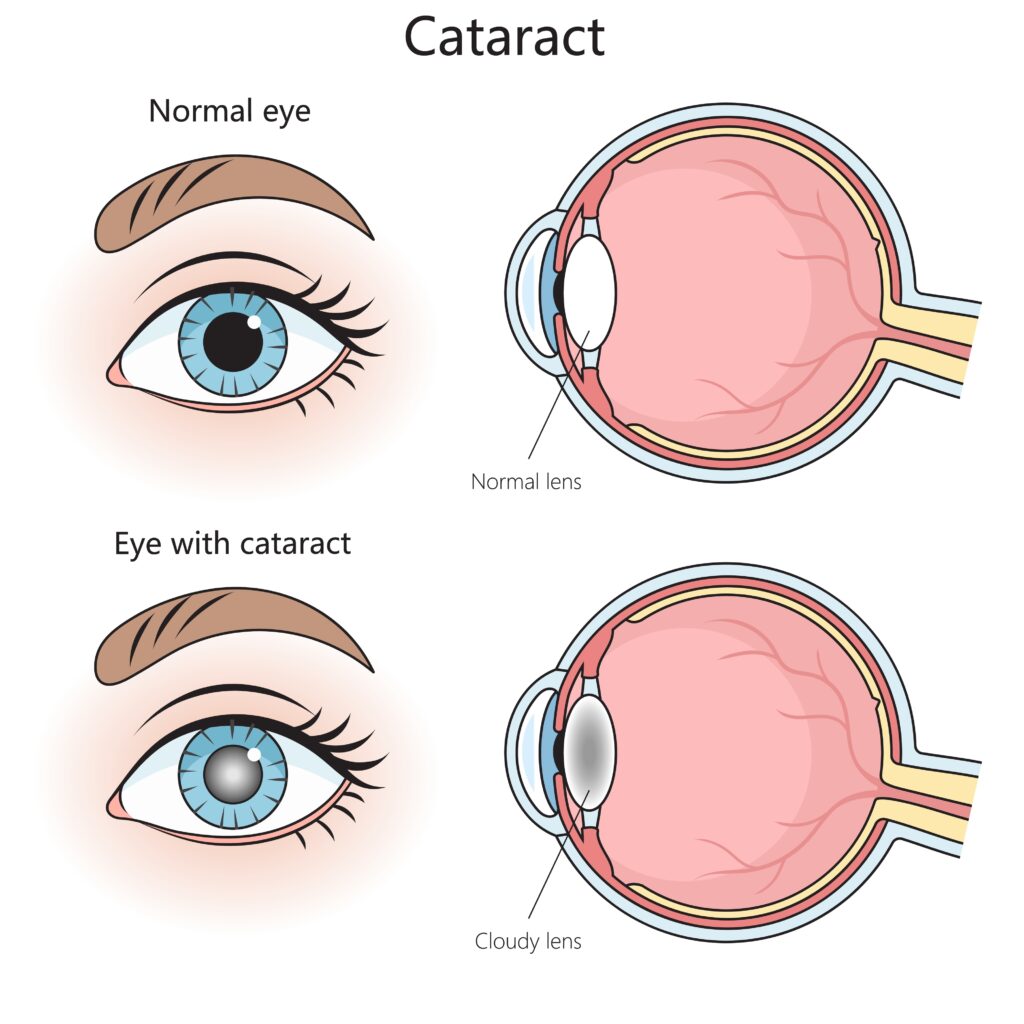
A cataract forms when proteins in the eye’s natural lens begin to break down and clump together, creating cloudy areas that scatter light before it reaches the retina. This process usually starts around age 40, though most people don’t notice symptoms until their 60s or later. Conditions like diabetes, long-term steroid use, and prolonged UV exposure can accelerate the timeline.
In the earliest stages, a cataract may only affect a small portion of the lens. Vision might seem slightly dim or dull, and a stronger reading lamp often solves the problem.
As the cloudiness spreads, symptoms intensify. What began as a minor nuisance becomes a daily obstacle. Without intervention, cataracts eventually progress to the point where the lens becomes dense and opaque, reducing vision and, in severe cases, leading to blindness.
Vision Changes You Can Expect Without Treatment
The hallmark of an untreated cataract is vision that looks increasingly cloudy, blurry, or filmy, as if you’re looking through a smudged window. Colors start to appear faded or yellowed because the patchy lens filters out shorter wavelengths of light. Many patients describe whites looking beige and blues looking washed out.
Glare and halos around lights become another persistent issue. Headlights, streetlamps, and bright sunlight can produce starbursts or streaks that make night driving dangerous.
Contrast sensitivity decreases, making it harder to distinguish between similar shades or to read in low light. Some people develop double vision in the affected eye, and frequent changes in their glasses prescription stop producing the clarity they once had. At this point, glasses simply can’t compensate for the changes occurring inside the eye’s lens.
How Do Untreated Cataracts Affect Daily Life and Independence?

Vision loss from untreated cataracts affects nearly every aspect of daily life. Reading small print, following recipes, seeing facial expressions, and recognizing faces across a room all become more difficult. Hobbies that depend on visual detail, like sewing, woodworking, gardening, and golf, start to feel frustrating rather than enjoyable.
Driving is often the first activity people give up, particularly at night or in the rain. This loss of driving independence can shrink a person’s world considerably, limiting visits to family, errands, and social engagements.
Working adults may struggle with screens, paperwork, or tasks requiring attention to detail. Over time, the emotional weight of these changes contributes to isolation and, in some cases, depression. Studies from the National Eye Institute have linked untreated vision loss in older adults to higher rates of cognitive decline.
Can Cataracts Increase Your Risk of Injury?
One of the most compelling reasons to take cataracts seriously comes from a study presented at the 2024 annual meeting of the American Academy of Ophthalmology. Researchers at the University of Texas Medical Branch at Galveston analyzed health records from more than 2 million adults with age-related cataracts and compared outcomes between those who had surgery within 10 years of diagnosis and those who did not.
The findings were striking. Patients who had cataract surgery were 5 to 11 percent less likely to suffer fragility fractures, which are broken bones that occur from low-trauma falls like tripping from a standing height. These include fractures of the wrist, arm, and ankle, which can be painful, disabling, and especially dangerous in older adults.
Even more significant were the findings on head injuries. People who had cataract surgery were 12 percent less likely to experience a traumatic subdural hemorrhage and 24 percent less likely to experience an epidural hemorrhage after a fall.
Both are potentially life-threatening forms of bleeding inside the skull. The association persisted even after researchers controlled for osteoporosis, diabetes, low vision, blindness, and retinal disorders, strongly suggesting that improved vision itself protects patients from these injuries.
This implies that when you can see clearly, you’re less likely to misjudge a step, miss a curb, or trip over an obstacle. For older adults, especially, that small margin of clarity can be the difference between aging safely at home and a hospital stay that alters the course of life.
Other Serious Complications of Delayed Treatment
Beyond fall-related injuries, waiting too long to treat cataracts can lead to problems within the eye itself. A cataract that progresses to the hypermature stage becomes very dense and hardened, which makes the lens more difficult to remove safely. Surgery on a mature cataract generally requires more energy, carries a higher risk of complications, and may have a longer recovery.
In some cases, an overripe cataract can leak proteins into the surrounding eye tissue, triggering a type of inflammation called phacolytic glaucoma. This condition causes a sudden spike in eye pressure and can permanently damage the optic nerve if left untreated.
Advanced cataracts can also obscure the view of the retina during routine exams, which means other sight-threatening problems like macular degeneration or diabetic retinopathy may go undetected until they’ve caused irreversible harm.
When Surgery Becomes the Right Choice

Cataract surgery is recommended when symptoms start interfering with the activities that matter to you. If you’re avoiding driving after dark, struggling to read, or feeling less confident on your feet, those are meaningful signals worth discussing with an ophthalmologist.
The procedure itself is among the most commonly performed and successful surgeries in medicine, with a nationwide success rate above 98 percent. At BVA Advanced Eye Care, our experienced cataract surgeons use advanced femtosecond laser technology for greater precision during incisions and lens fragmentation, and ORA-guided intraoperative wavefront analysis to optimize lens placement in real time.
Patients also have access to a range of premium intraocular lenses, including the Clareon Vivity, PanOptix, TECNIS Odyssey, and the Light Adjustable Lens, which can reduce or eliminate the need for glasses after surgery.
Addressing cataracts proactively preserves more than eyesight. It supports balance, independence, and overall health, helping daily life feel like your own.
Wondering whether it’s time to address your cataracts? Schedule an appointment at BVA Advanced Eye Care in Oklahoma City, OK, today.