

When exploring ways to improve their vision, many patients find themselves comparing cataract surgery and refractive lens exchange, and it makes sense why. These two procedures are almost identical in the operating room. What sets them apart isn’t the surgical steps, but the state of the eye before surgery begins.
The key difference is simple: Is the natural lens cloudy, or is it still clear? Keep reading to learn more about refractive lens exchange and how it compares to cataract surgery.
Why Do Cataract Surgery and RLE Look So Similar?
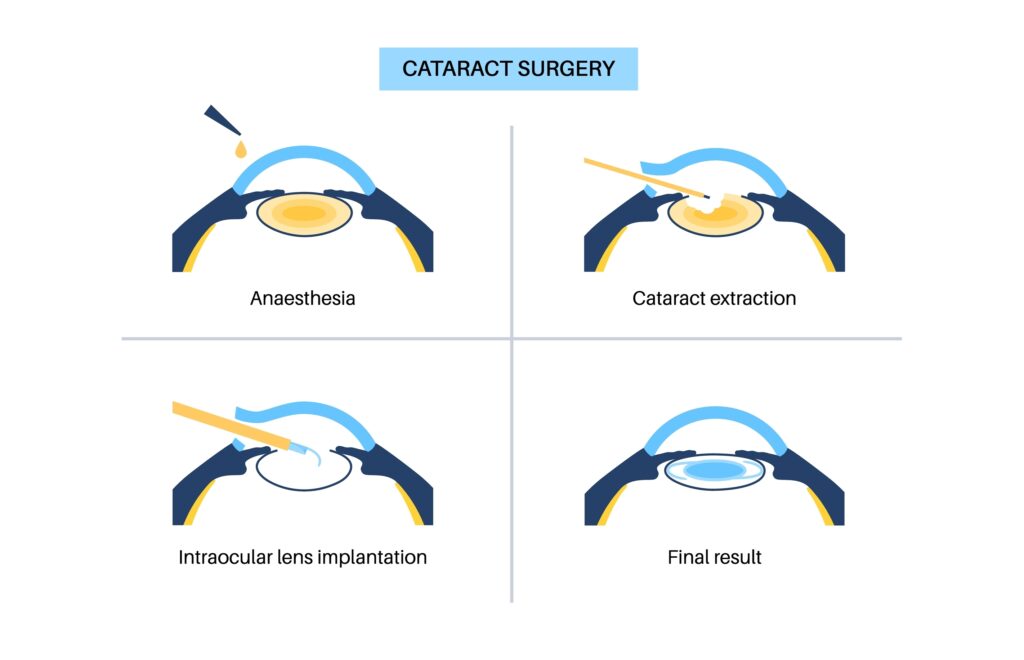
Both cataract surgery and refractive lens exchange (RLE) follow a nearly identical process: the eye’s natural lens is removed and replaced with a custom artificial lens, or IOL. The surgery begins with numbing drops, followed by a tiny corneal incision. The surgeon then uses ultrasound energy to break up the lens, removes it, and places the new IOL tailored to the patient’s vision needs.
Each procedure takes just fifteen to thirty minutes per eye, and if both eyes need treatment, they’re usually done about a week or two apart. Ophthalmologists at BVA Advanced Eye Care draw a clear line between the two procedures, though, because the reason for removing the lens changes how a patient qualifies, how insurance treats the procedure, and how the conversation about timing unfolds.
What Actually Separates Cataract Surgery From RLE?
Cataract surgery addresses a lens that has already turned cloudy. A cataract forms gradually, usually starting sometime after age forty, as proteins in the lens break down and scatter light instead of focusing it cleanly.
Patients may notice blurry vision, glare around headlights, fading colors, or a prescription that changes every year. Once a cataract has progressed enough to interfere with daily activities like driving or reading, surgery becomes the standard treatment, since no eye drop or medication reverses lens clouding.
RLE addresses a lens that is still clear. Patients pursuing RLE typically have presbyopia, or age-related farsightedness caused by a stiffening of the natural lens, and want to reduce their dependence on reading glasses. Some patients also choose RLE as a LASIK alternative, as it can better suit thin corneas and high prescriptions.
Rather than reshaping the cornea or adding a lens in front of the natural one, like LASIK or EVO ICL, RLE removes the natural lens entirely and replaces it with an IOL calibrated to the patient’s refractive needs. The surgical mechanics closely mirror cataract surgery, but crucially, the lens is removed before cataracts form, or in the case of very early cataracts.
Who Qualifies for Cataract Surgery Versus RLE?

Candidacy for these two procedures splits along fairly distinct lines. A patient qualifies for cataract surgery once a cataract is diagnosed and affects vision enough to interfere with daily tasks. Because this addresses a medical condition, cataract surgery is generally considered medically necessary and is often covered by insurance, including Medicare.
RLE candidacy looks different. These patients do not yet have fully developed cataracts. Instead, they tend to fall into one of a few categories:
- Individuals with presbyopia who want to reduce reliance on visual aids
- Individuals with thin corneas or very high nearsightedness or farsightedness who fall outside the range LASIK or PRK can safely correct
- Adults over forty who want to address both their existing refractive errors and get ahead of future cataract development in a single procedure
Because RLE is elective and performed on eyes without significant cataracts, it is typically classified as a refractive procedure and paid for out of pocket, similar to LASIK or PRK.
Do Cataract Surgery and RLE Use the Same Lens Options?
Once you decide to remove the natural lens, whether because of a cataract or as a refractive choice, the conversation about which IOL to implant looks remarkably similar. BVA Advanced Eye Care offers premium lens options including PanOptix, Vivity EDOF, TECNIS Odyssey, and the Light Adjustable Lens, each designed to address different combinations of distance, intermediate, and near vision.
Patients with astigmatism also have toric versions of many of these lenses available. A surgeon walks both cataract and RLE patients through the same set of questions to choose the best IOL for their needs: How much do you read? Do you spend time on a computer? Do you want to reduce dependence on glasses? Do you often drive at night? The answers guide the lens selection regardless of which procedure brought the patient to the operating room.
What Does Recovery Look Like?

Recovery after either procedure follows a similar path. Most people see better within a day or two, though it’s normal to experience some blurriness, glare, or halos during the first week as the eye heals and adapts to its new lens.
These symptoms usually fade in a few days to a couple of weeks. You can get back to most daily activities quickly, but it’s best to avoid rubbing your eyes, heavy lifting, and swimming for about two weeks. Follow-up appointments help ensure your vision is on track, and if both eyes need surgery, the second procedure is scheduled once the first has healed.
How Do You Know Which Procedure Is Right for You?
Age and symptoms can point you in the right direction, but they don’t tell the whole story. Imagine two people, both fifty-five, with similar prescriptions: one may need cataract surgery, while the other is a candidate for RLE, simply because one lens is cloudy and the other is clear.
The real answer comes from a thorough eye exam and a look at your vision history. At BVA Advanced Eye Care, surgeons check lens clarity, corneal shape, prescription strength, and overall eye health before recommending the best option.
Wondering if cataract surgery or refractive lens exchange is right for your vision? Schedule an appointment at BVA Advanced Eye Care in Oklahoma City, OK, and let our experts help you find the best solution.